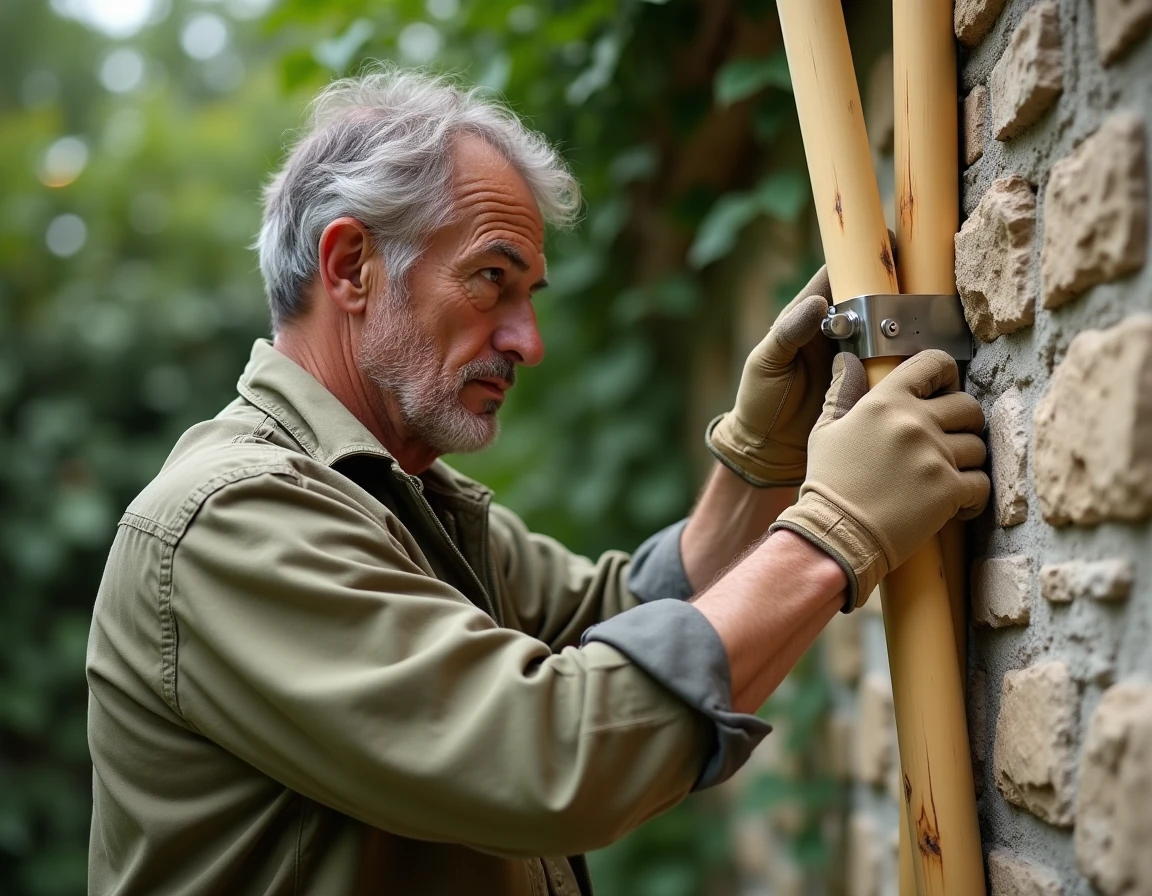
Fixing bamboo canes or panels to an exterior wall raises a specific technical question: what type of fastening can withstand cycles of moisture, wind, and material aging? The answer varies depending on the substrate (concrete block, brick, wood), the format of the bamboo (whole canes, lattice, flexible screening), and the wall’s exposure. This article compares the main fastening methods and identifies the parameters that make a difference in durability.
Stainless steel screws, standard plugs, or wire: comparison of fasteners for outdoor bamboo
| Fastening Method | Suitable Substrate | Wind Resistance | Risk of Bamboo Splitting | Estimated Durability |
|---|---|---|---|---|
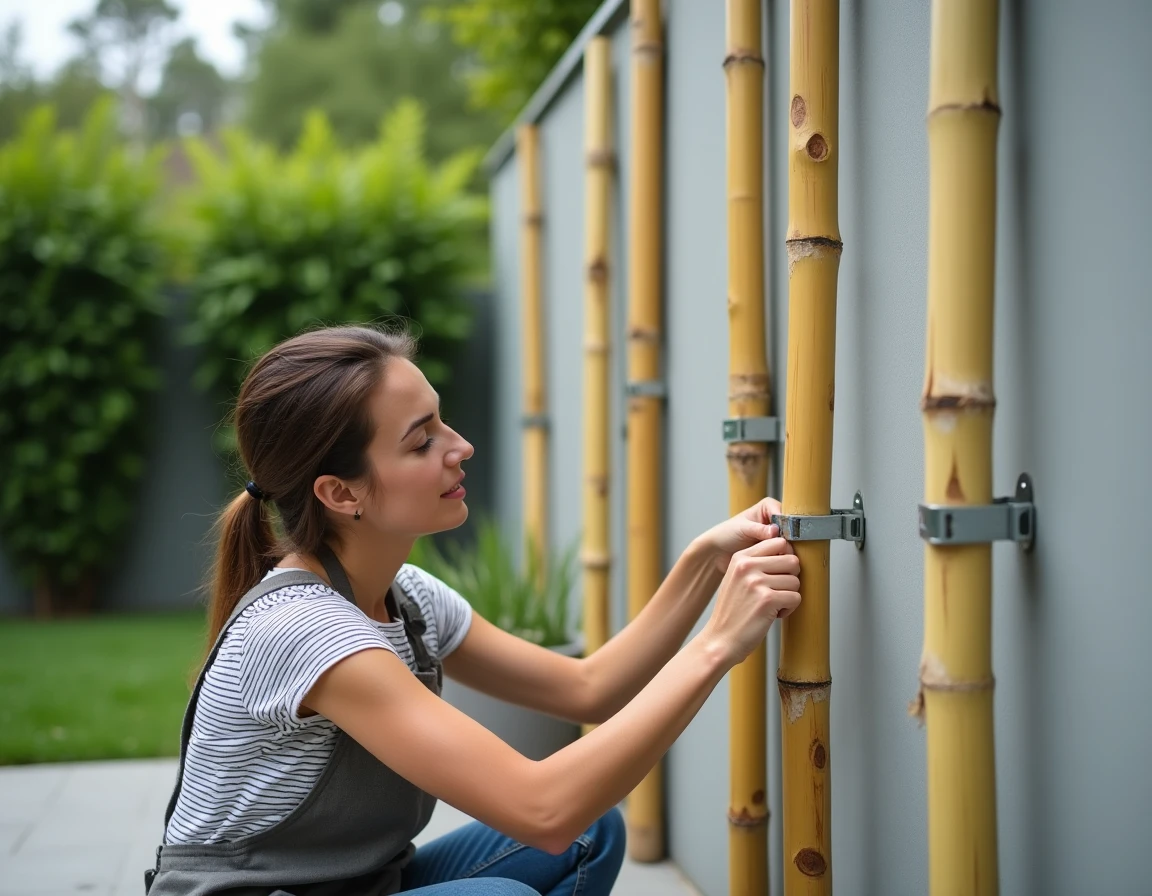
| Stainless steel screws A2/A4 + EPDM washer | Concrete block, brick, wood | High | Low (the washer absorbs pressure) | Long |
| Plug + unprotected metal screw | Concrete block, concrete | Medium to high | Medium (corrosion and possible cracks) | Medium |
| Galvanized wire on battens | All substrates via battens | Medium | Low | Medium (wire oxidation) |
| Transparent silicone adhesive | Smooth surfaces only | Low | None | Short (frequent detachment) |
Siling adhesive, sometimes mentioned in DIY forums, does not hold on textured or porous surfaces. User feedback confirms quick detachments, especially outdoors where temperature fluctuations expand the joint.
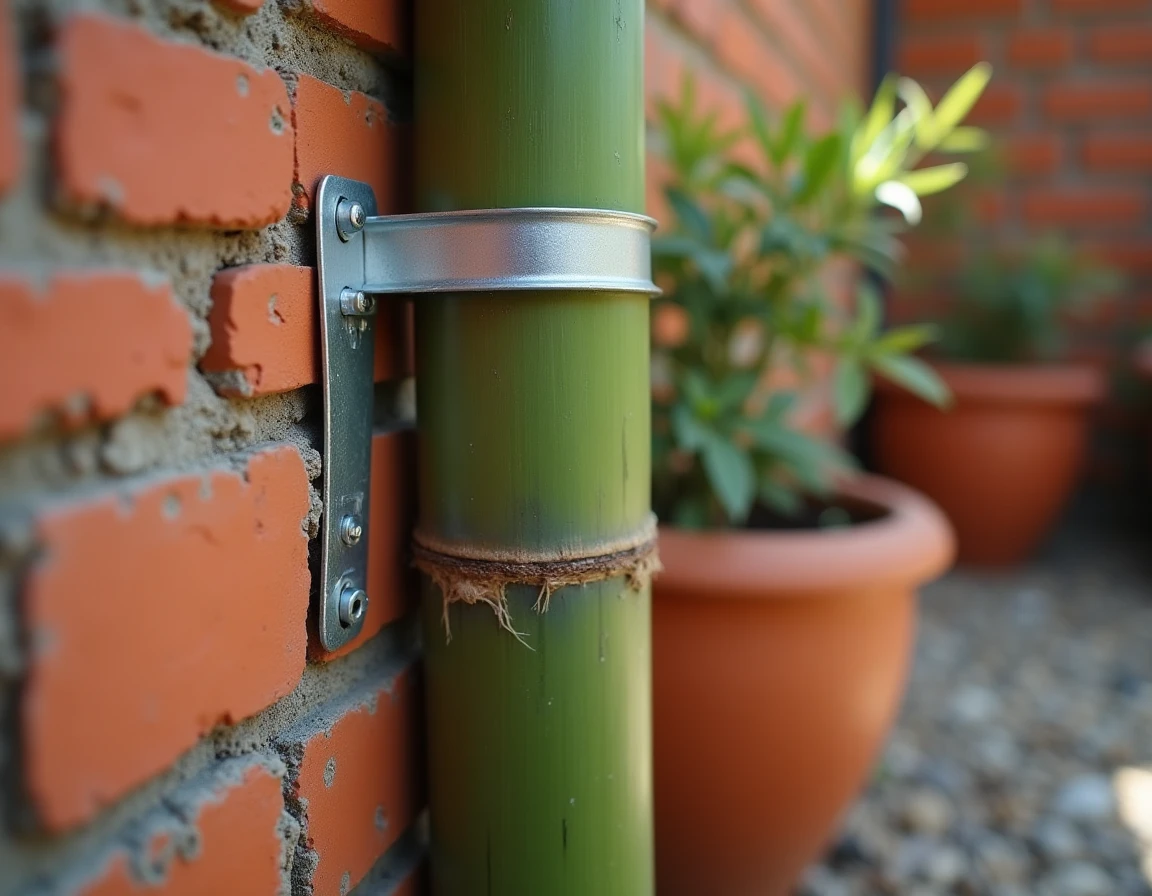
The combination of A2 or A4 stainless steel screws with EPDM rubber washers stands out significantly. The soft washer limits water infiltration into the drilling hole and distributes pressure, which reduces longitudinal cracks responsible for premature bamboo rot. This “screw + soft washer” approach is recommended by several specialized manufacturers as a sustainable alternative to unprotected standard plugs.
To delve deeper into the techniques for fixing bamboo to a wall, the logic remains the same: adapt the fastening/support pair to the bamboo format and its exposure.
Pre-treatment of bamboo before installation: the parameter most tutorials overlook
Several bamboo professionals now recommend a pre-treatment with water-repellent and UV-resistant stain before installation, rather than after. The difference is significant: treat all faces of the cane, including cut and drilled areas, before fixing anything to the wall.
The reason is physical. Bamboo absorbs moisture through its ends and damaged areas. Moisture/dryness cycles cause micro-cracks that weaken the fastening points. An untreated drilling becomes a gateway for water.
- Apply water-repellent stain to all faces, cuts, and drillings before assembly
- Allow to dry according to the manufacturer’s instructions (usually several hours in dry conditions)
- Renew treatment on cut areas made after the first application
- Prefer a stain combining UV protection and water-repellent properties to limit graying and swelling
This step lengthens preparation time. However, it significantly improves the longevity of the fastenings by reducing the movement of wood that gradually loosens the screws.
Whole canes or slatted lattice: which bamboo format for a wind-exposed wall
The choice of format directly conditions the fastening method and its resistance. Whole canes, heavy and rigid, exert significant tensile force on each anchoring point. On a wall exposed to wind, this phenomenon amplifies: the wind catch of a large-diameter cane is much greater than that of a perforated panel.
Recent content indicates a trend towards favoring slatted bamboo lattice or pre-assembled panels (like flexible screens) for wall fixings. These formats offer several concrete advantages for an exterior wall.
A flexible lattice weighs significantly less than an alignment of whole canes on the same surface. This weight reduction decreases the strain on the plugs and limits the risk of pulling away from the substrate. Wind partially passes through a perforated lattice instead of accumulating on it, which reduces mechanical stress on the fastenings.
For whole canes on an exposed wall, it is necessary to multiply the fastening points: an anchoring every 40 to 50 centimeters in height reduces the lever arm and distributes the load. With a pre-assembled lattice, two to three horizontal fastening lines are usually sufficient.
Intermediate battens: creating a ventilation space
Fixing bamboo directly against the wall traps moisture between the two surfaces. Installing battens (treated wood or aluminum) creates a ventilation space that allows water to drain and air to circulate.
This air gap between the wall and the bamboo slows down the degradation of the canes and the substrate. The battens also serve as an intermediate structure to fix the bamboo with galvanized wire, a method suitable for lightweight screens that avoids drilling each cane individually.
Common mistakes in bamboo fastenings on exterior walls
Three mistakes frequently recur in installations that degrade within a few seasons.
- Drilling bamboo without a pilot hole: the fibers of the bamboo splinter under the pressure of a direct screw, creating a crack that widens over time. A pre-drilling with a bit slightly smaller than the diameter of the screw is necessary
- Using untreated steel screws or wires: corrosion attacks the metal and stains the bamboo within a few months, weakening the anchorage. Stainless steel or galvanized are the only viable choices for outdoor use
- Neglecting expansion: bamboo swells and contracts according to ambient humidity. Tightening screws to the maximum blocks this natural movement and causes cracks. Leaving a slight play with the EPDM washer absorbs these variations
The durability of a bamboo fastening on an exterior wall depends less on the type of bamboo than on the quality of the fastening/treatment pair. A stainless steel screw with a soft washer, installed on pre-treated bamboo and ventilated by battens, constitutes the most reliable configuration against climatic constraints.