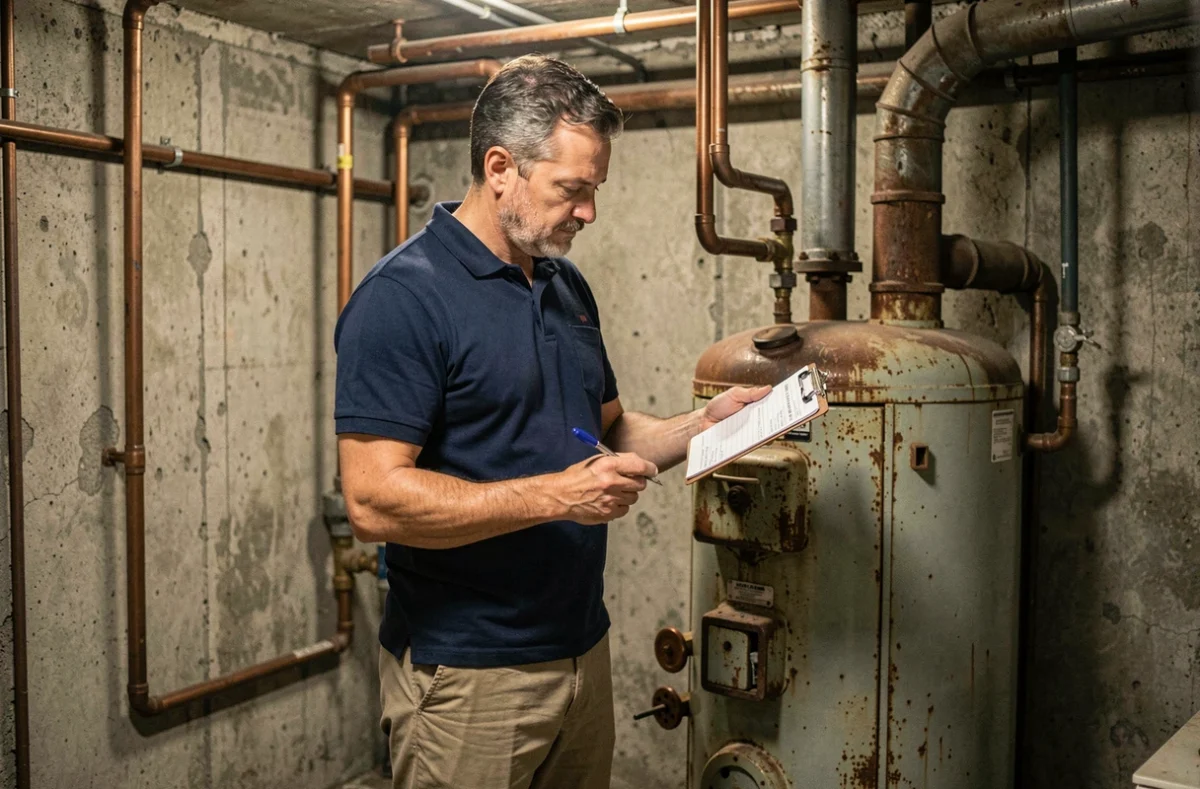
You are visiting a house from the 1970s or an old apartment. The heating runs on gas, the boiler hums, and the radiators heat up. Everything seems normal. But between a functioning installation and a safe installation, the gap can cost several thousand euros in repairs after signing. Before committing, a few targeted checks can help assess what the official diagnosis does not always clearly state.
Chimney sweeping and boiler maintenance: two distinct documents to request
Many buyers think that the annual maintenance certificate for the boiler also covers the flue. This is not the case. Boiler maintenance and chimney sweeping are two separate services, sometimes performed by different professionals.
Chimney sweeping concerns the flue to which the boiler is connected. Its frequency depends on the departmental health regulations, which vary from one municipality to another. Ask the seller for both certificates: the one from the heating technician for annual maintenance and the one from the chimney sweep for the flue.
If either is missing, you have no visibility on the actual condition of the exhaust system. A poorly maintained flue can cause a backflow of carbon monoxide into the home, a risk that neither the visit nor the gas diagnosis always quantifies. When conducting checks before purchasing a gas-heated property, these certificates are among the first documents to require.
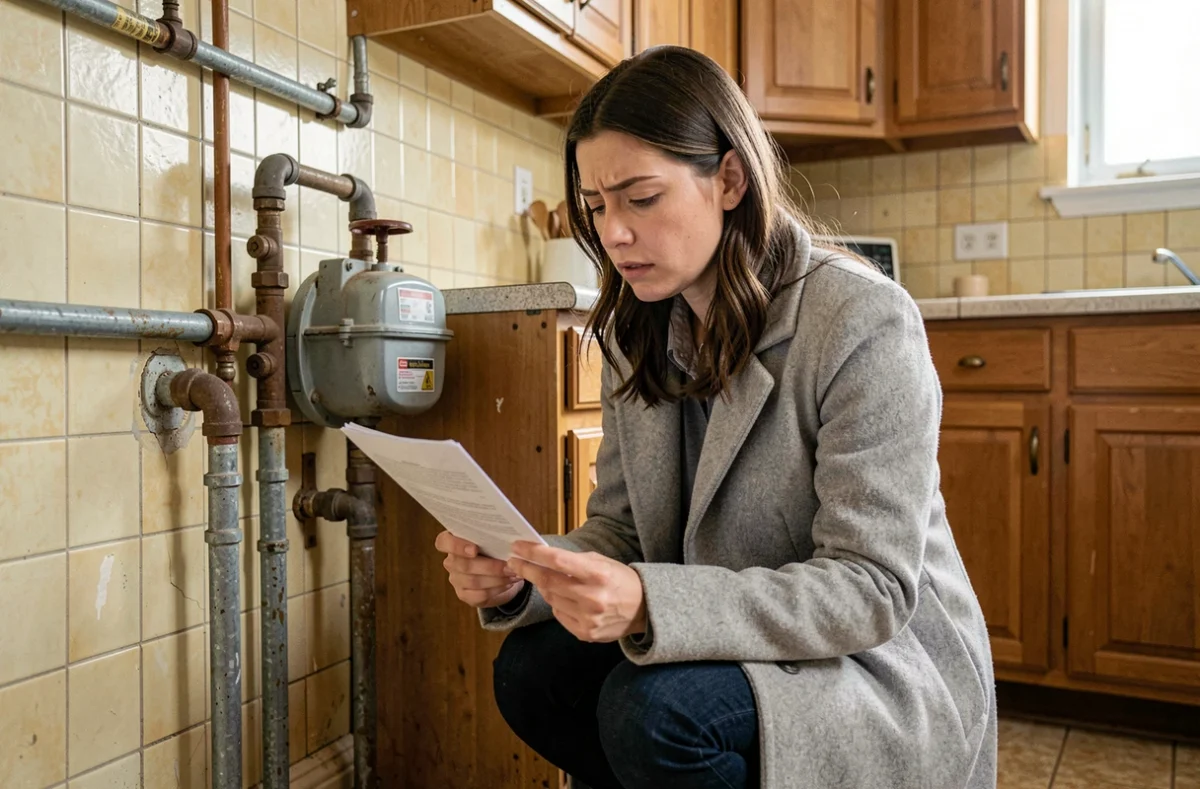
Gas diagnosis anomalies: read beyond codes A1, A2, and DGI
The gas diagnosis classifies defects into three levels. A1 indicates a defect to be corrected without urgency, A2 indicates a real danger, and DGI indicates a serious and immediate danger. A DGI results in the gas being cut off by the distributor if the defect is not resolved quickly.
A common trap is to feel reassured because the report only mentions A1 anomalies. Several cumulative A1s on different points (worn piping, insufficient ventilation, non-compliant connections) can represent a significant budget for bringing things up to standard, even if none justifies an immediate cut-off.
What the diagnosis does not quantify
The report from the diagnostician notes a condition at a given date. It does not provide estimates or lifespan projections for the equipment. You know that the ventilation in a room is insufficient, but you do not know how much it will cost to create a compliant air intake in a stone wall.
Have an independent heating technician prioritize the anomalies. Ask them to distinguish between urgent corrections, desirable upgrades, and work that becomes unnecessary if you plan to change energy sources.
Co-ownership with collective gas heating: additional checks
When the gas boiler is common to the building, your individual diagnosis only covers part of the installation. The state of the collective boiler depends on the decisions of the co-ownership, not on the seller of the apartment.
Before signing, consult the following documents:
- The minutes of the last general meetings, to spot any votes on replacing the boiler or work on the distribution network
- The maintenance log of the building, which mentions interventions carried out on collective equipment
- The projected funding calls, to know if a boiler replacement is already budgeted or just mentioned
A building whose collective boiler is nearing the end of its life may vote for a replacement that represents a significant financial burden for each co-owner. It is better to know this before making an offer than at the time of the funding call.

Gas boiler in an old property: replacement possible but not guaranteed in the long term
You may have read that gas boilers are prohibited. The nuance is important: the RE2020 excludes gas from new constructions but does not force the removal of an existing boiler. In an old property, replacing a gas boiler with a newer model remains possible according to the regulations in force at the time of the project.
This distinction changes the financial analysis of your purchase. If the boiler still has a few years left, you have time to plan a transition to a heat pump or another system. If it is at the end of its life, replacing it with a condensing gas model remains an option, but inquire about the available aids at the time of your project: they change regularly.
Cross-reference the gas diagnosis with the DPE
The energy performance diagnosis (DPE) assesses the overall consumption of the property. An old gas boiler with low efficiency pulls the rating down. Before buying, check if the energy classification of the property mainly relies on the heating system or the building’s insulation.
A property rated E or F due to an old boiler can significantly improve with just a replacement. A poorly insulated property will remain energy-consuming even with a new boiler. The DPE indicates where to focus the renovation budget after purchase.
Documents to gather before making an offer
Rather than a long list, focus on the documents that truly change your understanding of the property:
- The gas diagnosis (condition of the internal gas installation), valid if its date is less than three years old for a sale
- The annual maintenance certificate for the boiler and the chimney sweeping certificate for the flue
- Invoices for the replacement or repair of gas equipment (boiler, water heater, piping)
- In co-ownership, the minutes of the general assembly mentioning collective heating
A seller who provides these documents without difficulty sends a positive signal about the transparency of the transaction. A seller who hesitates or cannot find the certificates gives you, unintentionally, equally useful information.
Buying an old gas-heated property is not a bad choice in itself. The difference between a good and a bad deal often lies in what has been checked before signing, not in what is discovered afterward.