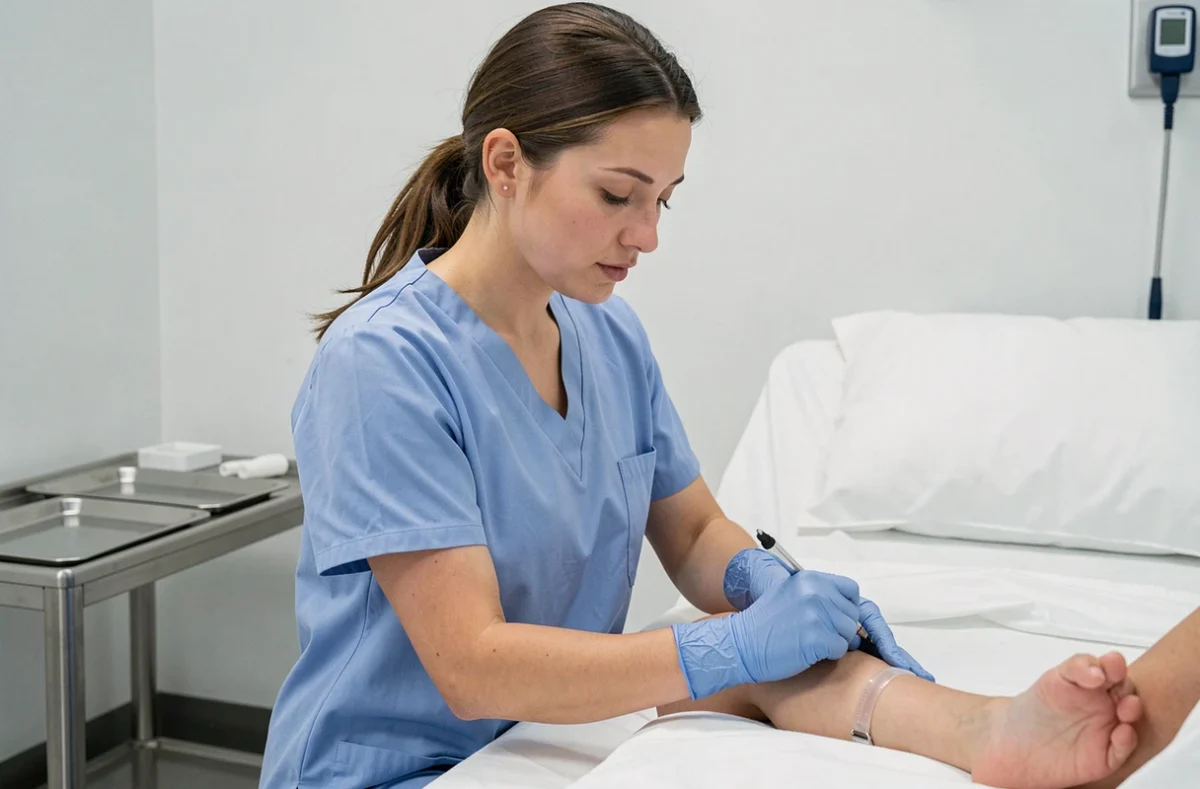
The decree of February 26, 2025 does more than expand the scope of nursing assistants’ duties. It redefines the chain of responsibility between the registered nurse (RN) and the nursing assistant for each technical procedure, making them conditional on a prior clinical assessment and formal documentation. Understanding how these responsibilities fit together is key to providing the new care without stepping outside the legal framework.
Delegation under a nursing protocol: what the Public Health Code actually requires
The expansion of technical procedures does not create new autonomy. Every delegated care procedure remains subject to the nurse’s decision: the nurse assesses the patient’s clinical situation, drafts or activates the protocol, and retains responsibility for overall monitoring. The Public Health Code maintains this functional hierarchy, including for procedures added by the 2021 reform and consolidated in 2025.
In practical terms, a nursing assistant never decides on their own to perform a technical procedure. The RN confirms that the care is appropriate given the patient’s condition, specifies the monitoring parameters, and sets the alert thresholds. Without this approval, performing the procedure could expose the nursing assistant to a charge of illegally practicing nursing.
The details of the technical procedures in the 2026 nursing assistant framework confirm that a protocol is not merely an administrative document, but a binding clinical tool that holds both professionals accountable.
Care in acute situations: the assessment-and-adjustment loop and limits on intervention
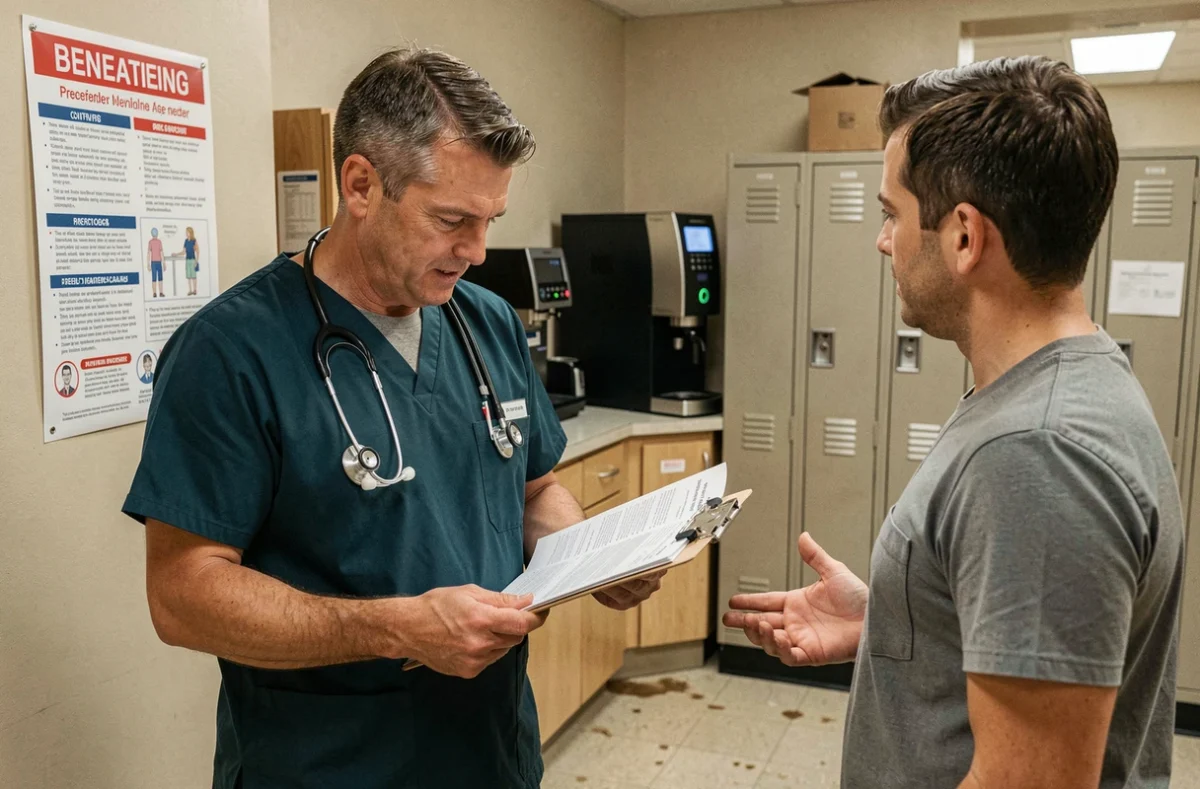
The framework introduces a category of care for acute situations that goes beyond passively recording vital signs. Nursing assistants are now trained to identify a clinical change, report it, and adapt their response before the RN arrives or makes a decision. This assessment-and-adjustment loop is the most significant shift in the text.
Vital signs: from recording to interpreting alerts
Measuring heart rate, oxygen saturation, and blood pressure was already part of routine practice. The difference is the requirement to compare the reading with a threshold set out in the protocol and issue a formal alert if it is exceeded.
Nursing assistants do not make diagnoses. They identify a warning sign, document it in the care record, and pass the information on to the RN through a predefined channel. Documentation is a procedure in its own right, not a paperwork formality.
Emergency care before the nurse takes over
In the event of a sudden deterioration (fainting, respiratory distress, or a fall with a suspected fracture), the framework authorizes first-aid and safety measures. The nursing assistant stabilizes the situation without starting treatment. They position the patient, clear the airway if necessary, alert the RN, and prepare emergency equipment.
The limits remain clear: no medication administration and no invasive procedures. The regulatory framework for nursing procedures that can be delegated to nursing assistants is itself in transition, making it all the more important to refer consistently to the written protocol rather than relying on customary practice.
Updating the skills of nursing assistants certified before 2021
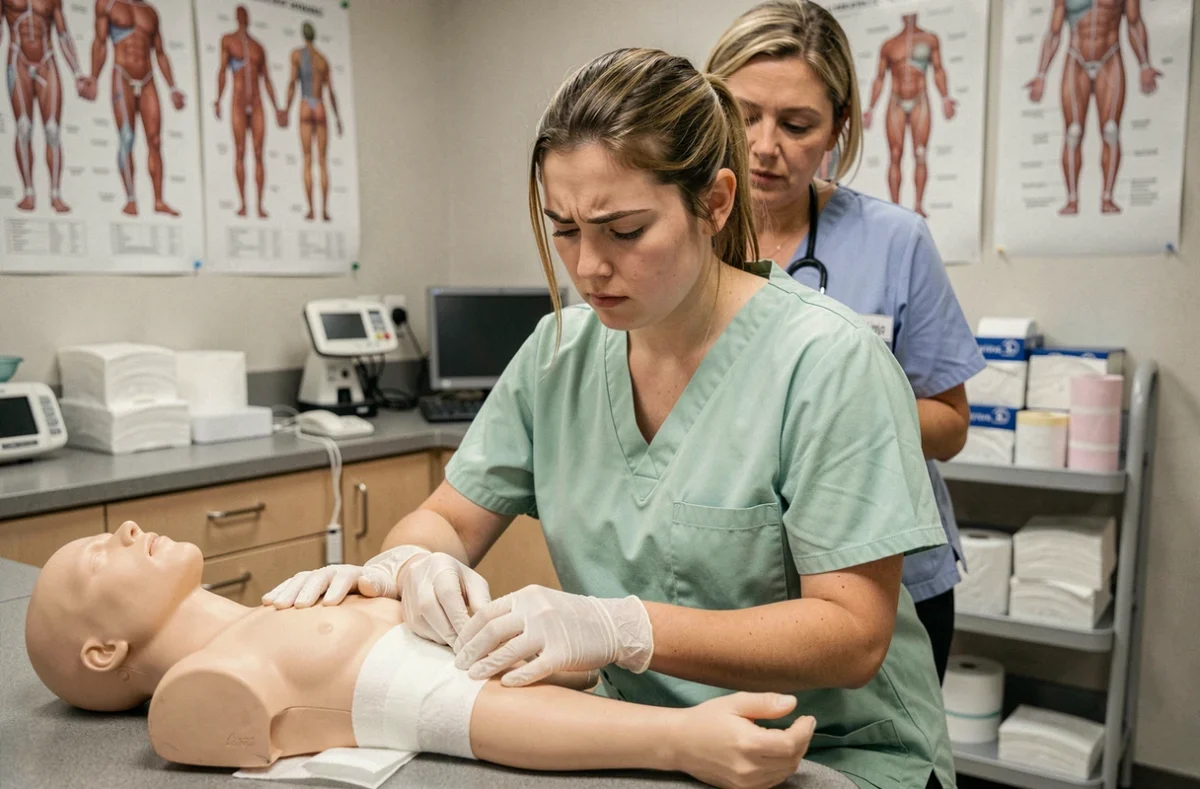
Professionals who earned the DEAS before the 2021 curriculum overhaul are not automatically authorized to perform the new procedures. A dedicated skills-update pathway, separate from initial training, is required. ANFH organizes this training into three modules:
- Collecting and analyzing health data, including learning to critically interpret vital signs and protocol-defined alert thresholds
- New care procedures in acute situations, including stabilization measures, the adjustment loop, and structured handover to the RN
- Identifying risks and prevention, focusing on the early detection of signs of deterioration (confusion, dehydration, unusual pain) and documenting them
This training is not optional. A nursing assistant certified before 2021 who performs a procedure within the expanded scope without completing the skills-update pathway is acting outside the applicable requirements, with the resulting disciplinary and insurance consequences.
Clinical reasoning for nursing assistants: a cross-cutting skill in the 2026 framework
The framework does more than list procedures. It develops clinical reasoning as a skill that runs through every training module. Nursing assistants must combine three mental processes in a short space of time:
- Observe: collect objective data (vital signs, behavior, skin color, and the patient’s own words) without making a diagnostic interpretation
- Analyze: compare this data with the protocol criteria and previous handovers to identify a trend or deviation
- Communicate: deliver a clear, prioritized, documented alert using a structured communication tool (such as SBAR or an equivalent approved by the facility)
This observe-analyze-communicate sequence replaces the old “do and report” approach. It requires regular practice through simulation and analysis of professional scenarios, both of which are now incorporated into continuing education programs.
Pharmacology: knowledge required, without prescribing
The framework includes pharmacology concepts designed to make the administration of treatments prepared by the RN safer. Nursing assistants are not authorized to prescribe or change dosages. However, they must know the expected effects and main adverse effects of common drug classes so they can detect warning signs during post-administration monitoring.
This requirement changes the nature of collaboration with the RN. Reporting an adverse effect means knowing what to look for, not simply noticing an unusual symptom. Skills-update training dedicates an entire module to developing this competency.
The 2026 framework changes the nursing assistant’s role within the care team. Mastering technical procedures is not enough without understanding the delegation framework, maintaining rigorous documentation, and applying the clinical reasoning that goes with them. For professionals already in the role, completing the skills-update pathway before performing the new procedures remains the only way to comply with the regulations currently in force.