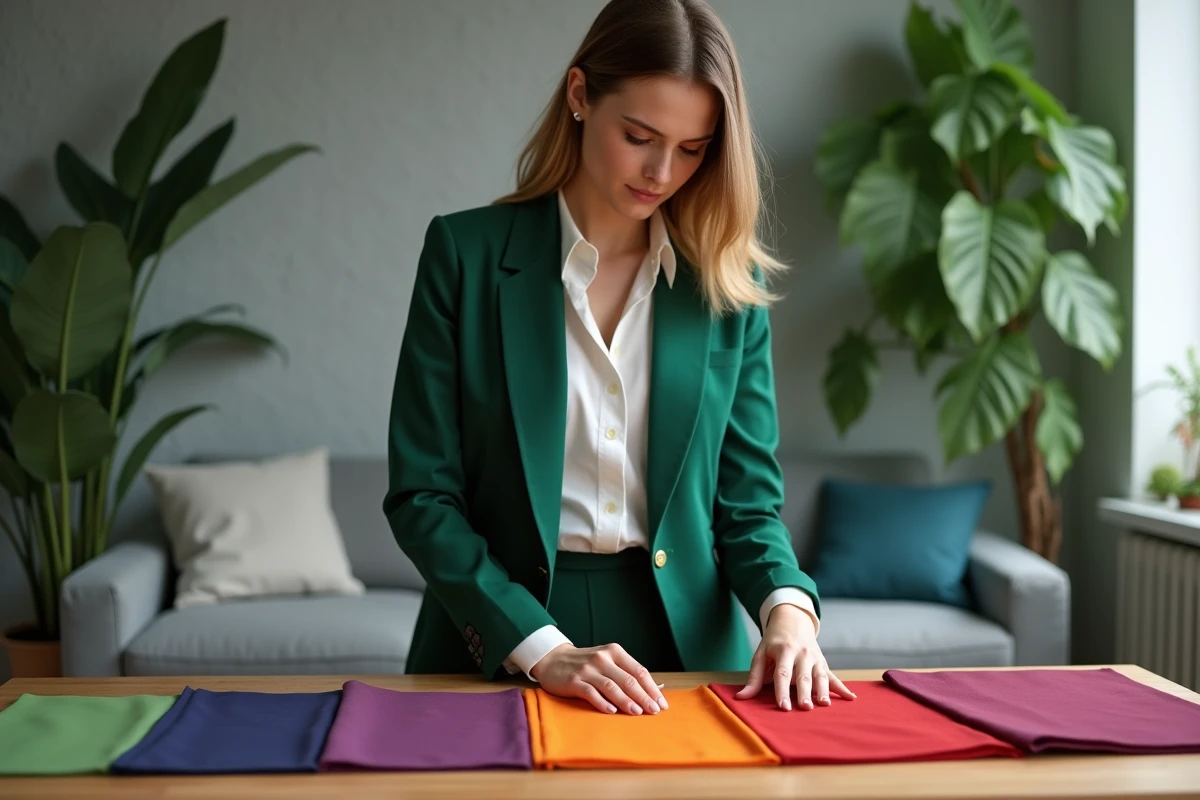
Green, instinctively associated with red, is not always in perfect opposition according to the color models used. The combination of these two colors can quickly tip into dissonance, contrary to some widespread beliefs. Common mistakes persist, particularly the use of green with specific shades of orange or purple, which often disappoint in visual or decorative compositions.
Sometimes, neighboring shades on the color wheel produce an unexpected contrast or leave an impression of dullness. Choices depend not only on theory: perception and context of use weigh heavily in the balance.
Why do some colors not go well with green?
In art as in nature, every nuance matters. Green, this color that is both fresh and deep, can surprise when it comes to pairing it. Some combinations confuse or tire the eye. At the root of these difficulties is the color wheel: it opposes green to red, but complementarity is not everything. Saturation, dosage, and context play a decisive role.
Some very bright or saturated tones, acid yellow, intense purple, bright orange, create too stark contrasts with green. Their proximity or, conversely, their distance in the color palette creates an unpleasant tension for the eye. In painting, fashion, or decor, this observation recurs: some combinations dull green or make it aggressive.
The perception of green also varies according to its shade. A mint green, for example, does not react like a fir green; a celadon differs from a forest green. Pairing green with cold metallic tones or very dark grays can lead to an unbalanced, sometimes even dull result. The color wheel remains a good guide, but one must also consider materials, light, and the use of the space.
For those looking to delve deeper into colors opposite to green, the advice offered in “Colors that do not go with green: how to pair them well – Zlati Constructions” provides concrete tips to avoid classic pitfalls and refine choices, whether aiming for sobriety or bolder combinations.
Colors opposite to green: common mistakes and false good ideas
One might think that pairing green with its opposite colors on the color wheel is child’s play. But the reality is more nuanced. Attempting the bright green and vivid red or saturated orange duo often leads to too harsh a contrast. The eye tires quickly, especially when these colors cover large surfaces, such as in a bedroom or kitchen.
Among the persistent misconceptions, there is the belief that all shades of purple or orange go well with green, or the layering of pure primary colors. Placing a forest green next to an acid yellow or electric blue risks fragmenting the palette and breaking the balance of a room. Accumulating saturated tones without transition gives a cold, unfinished effect.
The intensive use of dark gray or frosted brown often weighs down green, robbing it of its brightness. Poorly balanced metallic colors, like silver or chrome, add unwanted reflections that blur the perception of green. Directly opposing the color, especially in decor or fashion, quickly leads to visual overload.
Here are some tips to avoid these pitfalls:
- Avoid overly sharp contrasts: vivid red, pure orange, saturated purple.
- Favor subtlety in the use of secondary or complementary colors.
- Integrate opposite colors in touches, within a thoughtful palette.
Missteps are not limited to the choice of shades. The distribution of colors, ambient light, and the function of the room play a leading role. The intensity of green, the area concerned, the desired atmosphere… all these parameters must be considered for green to reveal all its richness.

Winning combinations to enhance green without mistakes
To highlight green, everything relies on the finesse of the combinations and the choice of complementary tones. Rather than playing frontal opposition, it is about composing with colors that bring out green without stifling it. Neutral tones are excellent allies: beige, off-white, pearl gray, linen, or sandy. Inspired by nature, these shades soothe the whole and reveal the personality of green, whether it is mint, fir, or forest.
For more character, pairing green with light or dark wood establishes depth and elegance. A few touches of terracotta, ochre, or caramel warm up the composition while maintaining harmony. Peacock blue or old rose infuse a sophisticated note, particularly welcome in a dining room or reception area.
Black, used sparingly, structures the space and highlights the style. Pastels, powder pink, soft coral, mustard yellow, converse with water green or celadon, creating fresh and modern atmospheres.
To successfully achieve these combinations, keep in mind these few recommendations:
- Favor soft transitions between shades.
- Rely on natural light to give depth to the combinations.
- Vary the textures: linen, velvet, wood, brass.
Well accompanied, green stands out without ever becoming tiresome. It then becomes the key to a defined style, neither dull nor flashy, ready to adapt to the rhythm of your desires and the seasons.