
The property tax on an independent cellar is not calculated like that of an apartment or a house. The property is classified as a built dependency, with a reduced weighted area, and its taxation depends on criteria that the tax administration applies distinctly. Understanding these mechanisms allows one to verify whether the amount claimed truly corresponds to the nature of the premises.
Weighting coefficient and area considered for a cellar
The area taken into account for calculating the cadastral rental value of a cellar is not its actual ground area. The tax administration applies a reduced weighting coefficient, which reflects the lesser utility of a storage space compared to a living room.
For dependencies of the cellar type, this coefficient is in a lower range. Specifically, the weighted area of a cellar represents a fraction of its actual area, which mechanically decreases the cadastral rental value used as the basis for calculation.
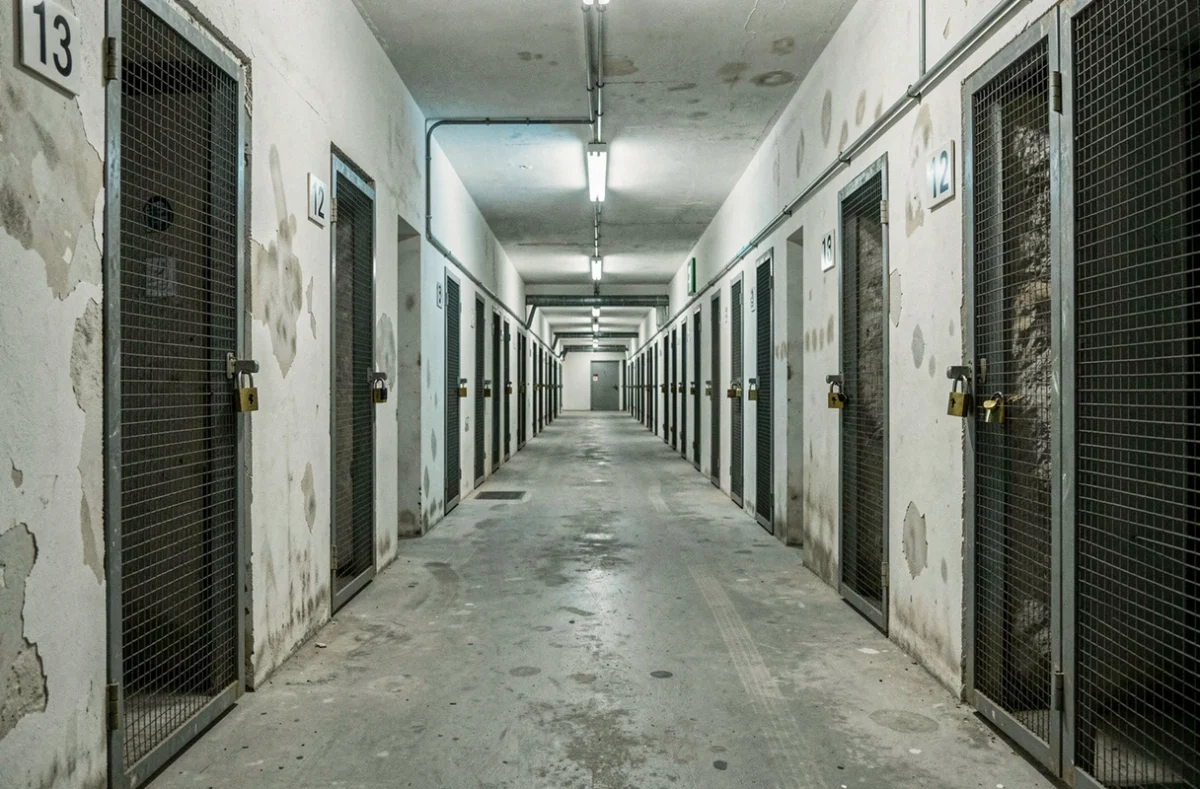
Article 324 L of Annex III of the CGI distinguishes the elements that make up a residential premises. Cellars are included among the built dependencies, alongside garages, attics, and storerooms. When a cellar is independent (external access, separate lot, no direct physical link to a dwelling), it can be registered as a distinct property in the cadastre, with its own tax identifier.
This classification has a direct consequence: the cellar then generates a separate property tax notice, distinct from that of the main dwelling. To better understand the property tax for a standalone cellar, one must examine how the administration links or separates each lot in its cadastral database.
| Type of premises | Tax classification | Weighting coefficient | Separate notice |
|---|---|---|---|
| Main room (living room, bedroom) | Main part | Full (1.0) | No |
| Cellar attached to the dwelling | Integrated dependency | Reduced | No |
| Independent cellar (separate lot) | Isolated built dependency | Reduced | Yes, in most cases |
| Independent garage | Isolated built dependency | Reduced | Yes, in most cases |
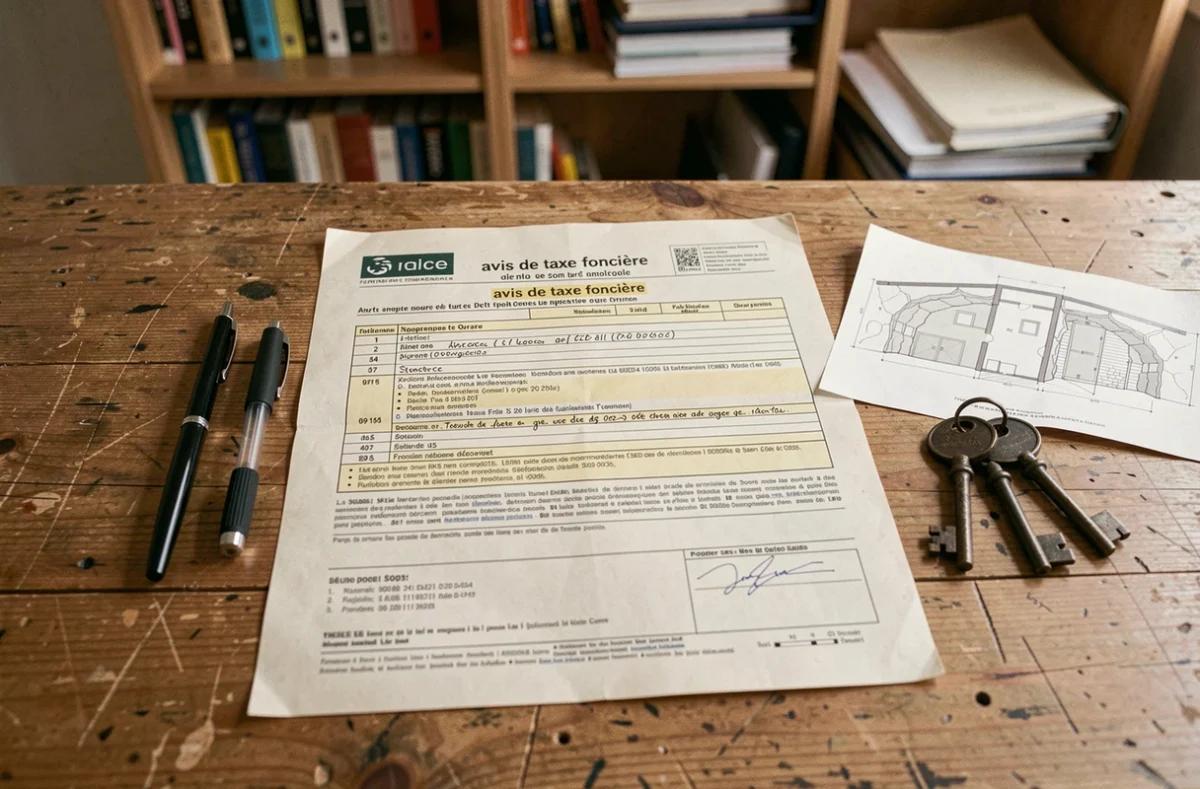
Revaluation 2026 and municipal rates: what affects the amount
The cadastral rental value is subject to an annual revaluation indexed to the harmonized consumer price index. For 2026, this national revaluation amounts to 0.8%. It applies uniformly to all built properties, including independent cellars classified as dependencies.
This increase represents only part of the equation. The rates voted by the municipality and the intercommunal authority (EPCI) can change each year during the municipal budget vote. A cellar located in a municipality that increases its rate will experience a rise greater than the national revaluation alone.
On the other hand, a municipality that maintains or lowers its rate can neutralize the effect of the revaluation. Attributing an increase in property tax solely to the national revaluation is therefore inaccurate: both parameters must be considered to understand the evolution of the amount on the notice.
The general revision of cadastral rental values, initially planned for 2026, has been postponed by the finance law. The first effects are not expected until 2030-2031. Until that deadline, the calculation is based on historical bases updated each year by the flat-rate coefficient.
Common errors on the cadastral record of an independent cellar
The data recorded in the cadastre serves as the basis for calculation. If the description of the property no longer corresponds to reality, the amount of the property tax may be incorrect, sometimes for several years.
The most common situations regarding independent cellars:
- The actual area recorded is greater than the effective area, for example, after a data entry error during the initial declaration or a change of ownership.
- The cellar appears twice in the cadastral database, once attached to the dwelling and once as a separate lot, which doubles the area taken into account.
- The weighting coefficient applied corresponds to a better category of premises (converted storeroom, professional space) while the cellar remains a raw space without equipment.
- A door identifier or a fictitious lot number was assigned during an exchange with the tax service, creating a “second property” that does not physically exist.
Verification involves consulting the descriptive record of the property, accessible from the personal space on impots.gouv.fr. The “Real Estate” section allows viewing each registered lot, its area, nature, and allocation.
Request for correction with the tax service
In case of an anomaly, a claim can be addressed to the property tax center to which the property belongs. The owner must provide supporting documents: plan, area measurement, photos if necessary. The correction of the cadastral record leads to a recalculation of the rental value and, consequently, of the amount of the property tax.
The processing time varies by center. Some owners report exchanges that span several months, with successive additional requests.
TEOM and property tax on a cellar: two distinct lines
The household waste collection tax (TEOM) may appear on the same notice as the property tax for an independent cellar. The TEOM follows a specific rate and is not a component of the property tax itself.
For an independent cellar, the presence of the TEOM depends on the attachment of the premises to an address actually served by the collection service. A lot located in a basement of a collective building will generally be covered, while a cellar isolated in another building may be subject to separate billing or no TEOM.
The property tax is established in the name of the owner or usufructuary of the built property. Even rented to an individual, a cellar remains taxed in the name of its owner. The tenant does not receive the property tax notice but may be charged the TEOM if the lease provides for it.
Checking the consistency between the weighted area, the cadastral classification, and the applied rates remains the only reliable way to ensure that the amount claimed corresponds to the reality of the property. Owners of independent cellars should consult their descriptive record as soon as they receive the notice, rather than discovering an anomaly several years later.