
The year 2026 marks a turning point in the way technological innovations reach the general public and businesses. Several regulatory frameworks come into effect, hardware architectures shift towards the edge of networks, and artificial intelligence faces its first binding legal constraints in Europe. The tech landscape is no longer just a race for raw performance: it now incorporates issues of sovereignty, compliance, and energy sobriety.
EU AI Act: the regulation that reshapes product roadmaps
Since February 2, 2025, the prohibitions set by the EU AI Act apply to systems classified as having unacceptable risk. Social scoring, manipulation of psychological vulnerabilities, emotion recognition at work and school, and mass scraping of facial images for model training: these practices are now banned on European territory.
The penalties can reach 35 million euros or 7% of global turnover, with a scaled approach for SMEs. This is not a theoretical signal. Several major digital players have already revised their roadmaps to remove or rephrase features related to persuasive AI or emotional detection.
Projects for emotional recognition in HR or educational contexts are experiencing a notable decline. For companies developing AI solutions in France and Europe, compliance with the regulation becomes a technical prerequisite, not just a legal exercise. Field feedback varies on the pace of adaptation: some SMEs are still discovering the extent of their obligations, while large tech groups have already integrated compliance audits into their development cycles.
Following the news on techronix.fr allows one to gauge how this regulatory framework redistributes power among European and American players in the sector.
Edge AI and local data processing: what is changing concretely
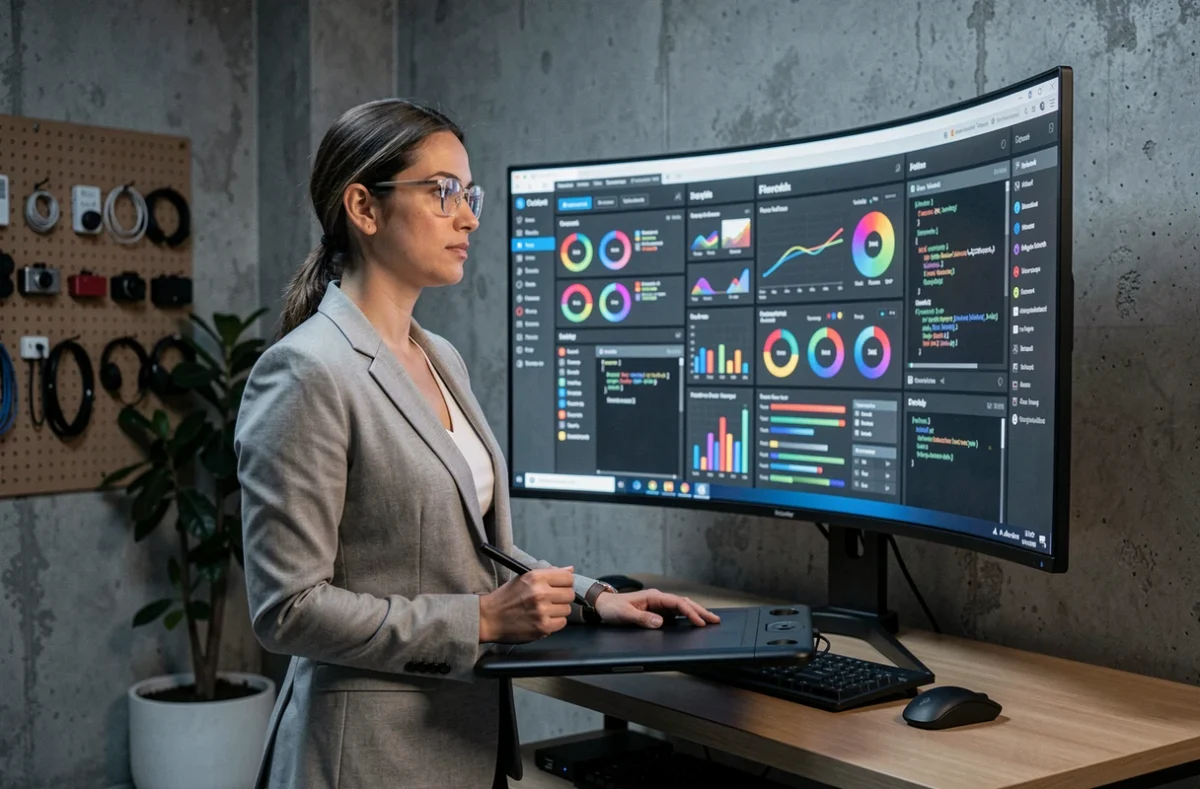
The dominant architecture of AI relied on massive calls to remote servers. This model reaches its limits when latency, energy cost, or data privacy come into play. Edge AI, which involves executing artificial intelligence models directly on devices or in close proximity to data sources, is gaining traction in several sectors.
In industrial settings, ultra-low-power chips embedded with TinyML allow for continuous monitoring of machine status without going through the cloud. Predictive maintenance no longer depends on a stable connection to a data center.
For the general public, smartphones and connected glasses incorporate neural processors capable of running language or vision models locally. The promise: personal data processing that never leaves the device. The available data does not yet allow for conclusions about the actual extent of consumer adoption, but hardware announcements from chip manufacturers are all heading in this direction.
Autonomous AI agents: beyond text generation
Generative AI has saturated media attention with the production of texts and images. The trend emerging in 2026 is that of agentification: AI systems capable of chaining multiple tasks autonomously, reasoning through logical sequences, and making intermediate decisions without constant human intervention.
In practical terms, this translates into agents specialized in supply chain management, predictive maintenance, or the automation of administrative processes. These agents do not merely respond to a one-off request. They orchestrate multiple steps, query databases, and adjust their actions based on the results obtained.
However, the reliability of these systems remains a point of friction. Current models still produce reasoning errors on complex tasks. Companies deploying these agents in production maintain human validation loops, which tempers the notion of complete autonomy.
- Logistics chains: agents capable of readjusting supplier orders in real-time based on stock levels and delivery times
- Customer support: systems that handle a complaint from start to finish, from diagnosis to solution proposal, without systematic escalation
- Cybersecurity: agents that detect a network anomaly, correlate signals, and isolate a threat before an analyst intervenes

Robotics and connected hardware: uses that are stabilizing
Domestic robots and connected objects have long been seen as gadgets or prototypes. Several segments are reaching a stage of maturity where utility surpasses technological curiosity.
Autonomous delivery robots are being deployed in defined urban perimeters, with local regulatory frameworks beginning to take shape. In warehouse logistics, cobots (collaborative robots) work alongside human operators on sorting, palletizing, and quality control tasks.
In healthcare, connected devices for home medical monitoring are multiplying. Continuous glucose monitors, connected blood pressure monitors, cardiac telemonitoring devices: digital health is no longer limited to wellness applications. The data collected feeds medical monitoring platforms that allow healthcare professionals to intervene earlier.
- Connected glasses with augmented reality display for industrial maintenance technicians
- Autonomous disinfection robots deployed in healthcare facilities
- Low-power IoT sensors for environmental monitoring in agriculture
The common thread of these developments is not the novelty of the technologies themselves, but their transition from an experimental stage to operational deployment. What distinguishes 2026 from previous years is less the emergence of new concepts than the convergence between regulatory frameworks, hardware maturity, and validated use cases in the field.