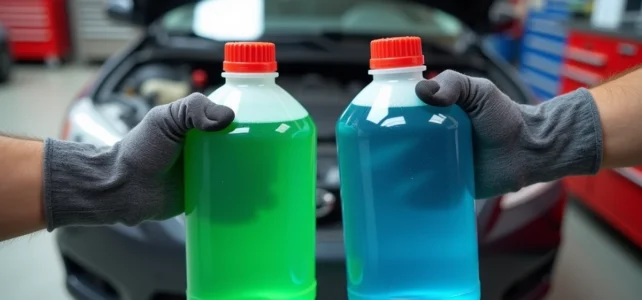
The coolant and windshield washer fluid are both stored under the hood, in reservoirs that are sometimes very close together. Confusing them during a refill can damage the engine’s cooling system or impair windshield visibility. Distinguishing them relies on three observable criteria without tools: chemical composition, physical properties to the touch, and the regulatory labeling of the container.
Chemical composition: glycol vs. alcohol, two distinct families
Coolant is based on glycol (ethylene glycol or propylene glycol) mixed with demineralized water and corrosion inhibitors. This glycol allows the liquid to circulate within the engine block without freezing in winter or boiling in summer.
Windshield washer fluid, on the other hand, is formulated from alcohol (ethanol or isopropanol) diluted in water, with surfactants to dissolve insects and greasy residues on the windshield. The label often states “contains isopropyl alcohol.”
This difference in chemical base explains why the two liquids are not interchangeable. The alcohol in windshield washer fluid, when poured into the cooling system, evaporates at low temperatures and provides no protection against corrosion or overheating. Conversely, the glycol in coolant leaves a greasy film on the windshield and degrades wiper blades within weeks. Knowing how to recognize coolant in windshield washer fluid prevents this type of damage.
Color and texture of the liquid: what touch reveals under the hood
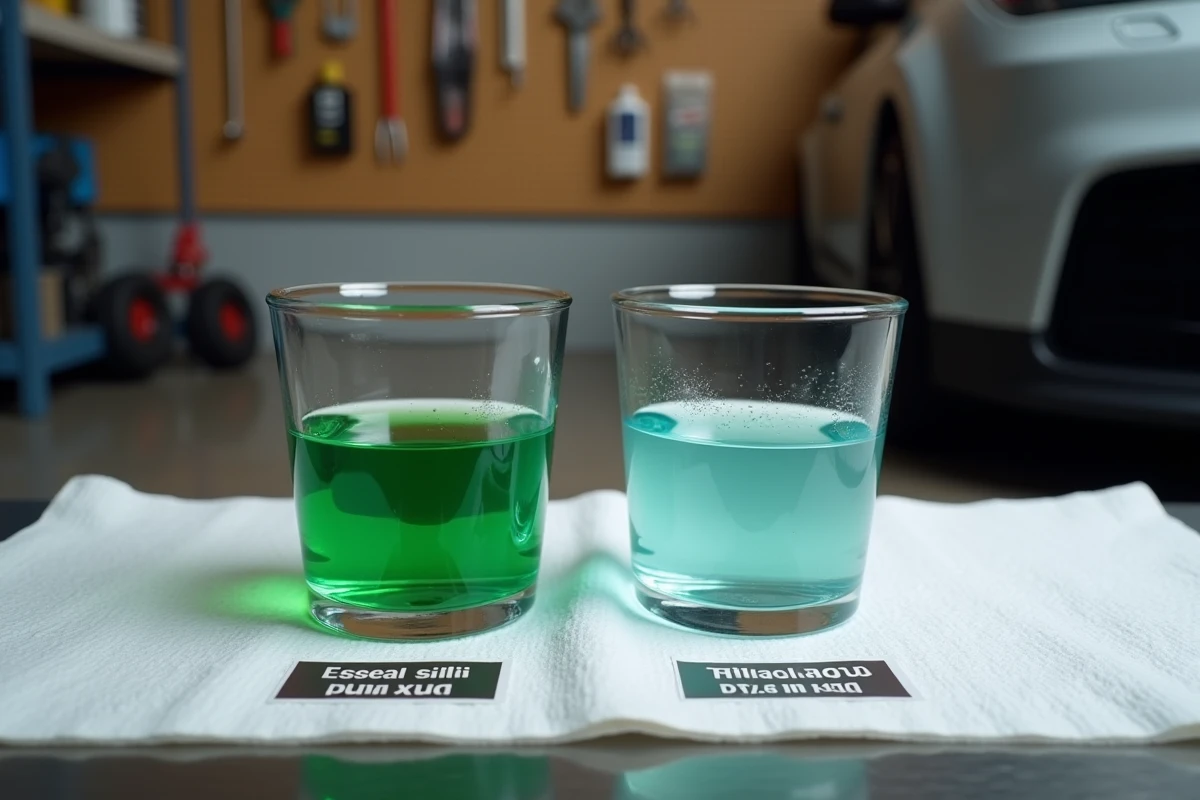
Color is the first visual clue, but it can be misleading. Windshield washer fluid is often blue. Coolant can be blue, green, pink, orange, or purple depending on the manufacturer’s standard. A blue container is therefore not definitive.
Touch is a more reliable criterion than color. Glycol-based coolant leaves a slightly greasy and viscous feeling between the fingers. Alcohol-based windshield washer fluid evaporates quickly and leaves no oily residue on the skin.
The smell completes the diagnosis. Windshield washer fluid has a pronounced alcohol smell, sometimes accompanied by a fragrance (apple, lemon). Coolant has a sweet, chemical odor, with no alcoholic note. Rubbing a drop between the thumb and index finger, the combination of greasy texture and sweet smell points to coolant.
Summary of sensory clues
- Greasy texture, persistent film on fingers, sweet smell: coolant
- Rapid evaporation to the touch, pronounced alcohol smell: windshield washer fluid
- Blue color: non-discriminative, both liquids can be blue
Labeling and CLP pictograms: read the container before pouring
When the original container is available, the label clearly distinguishes between the two. Coolant and windshield washer fluid containers are subject to the CLP regulation (Classification, Labelling and Packaging), and their hazard pictograms differ significantly.
A coolant container almost always bears a toxicity and environmental hazard pictogram. Ethylene glycol is classified as toxic if ingested. Several manufacturers like TotalEnergies or Motul also add a corrosion pictogram on their safety data sheets.
Consumer windshield washer fluid, based on alcohol, generally displays only a flammability pictogram, or even no pictogram depending on the formulation. This difference in labeling is the quickest way to identify an unlabeled container: the presence of a red diamond with a skull or a dead tree indicates coolant.
Labels to look for
- “Ethylene glycol” or “propylene glycol” in the composition: coolant
- “Isopropyl alcohol” or “ethanol” in the composition: windshield washer fluid
- Toxicity pictogram (skull, exclamation point): very likely coolant
- Flame pictogram alone or absence of pictogram: windshield washer fluid
Reservoirs under the hood: identifying the correct cap on the vehicle
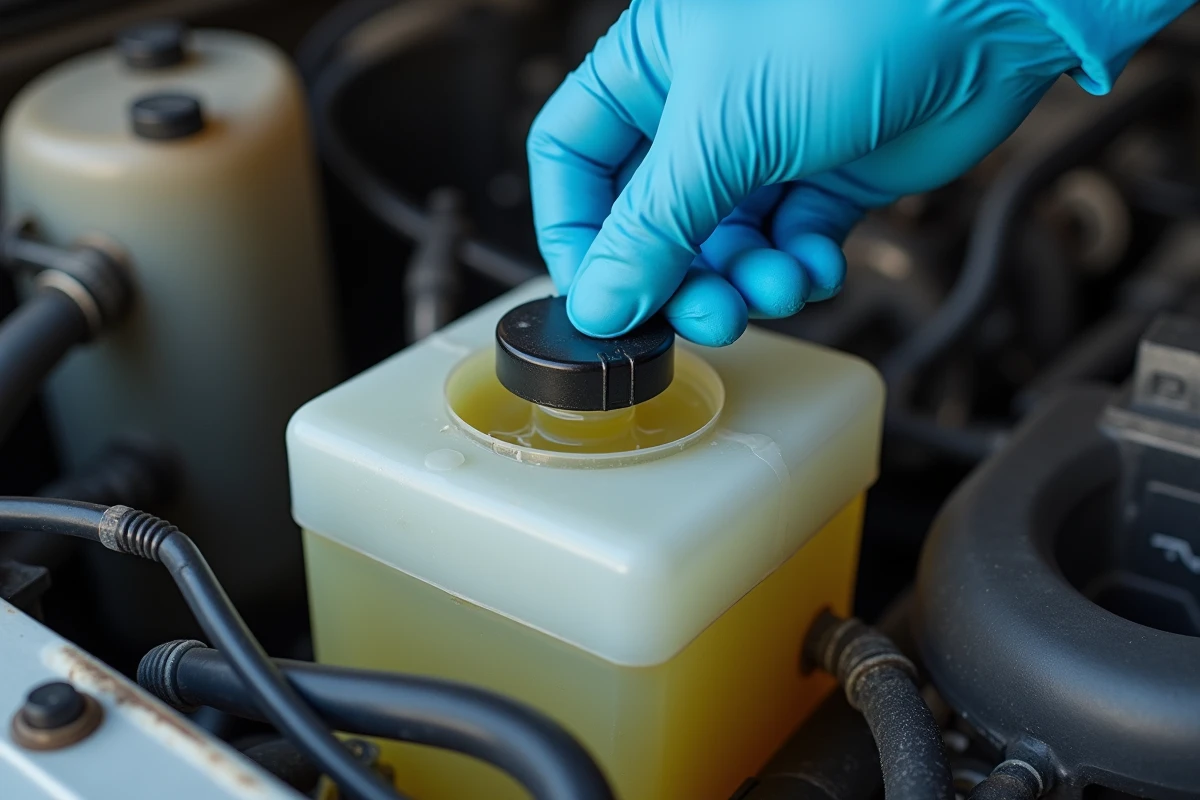
On most vehicles, the windshield washer fluid reservoir has a cap marked with a pictogram of a windshield with a water spray. Its color is often blue or black. The coolant reservoir, however, is connected to the engine circuit by hoses. Its cap bears a temperature symbol or the word “coolant.”
The coolant reservoir has min/max graduations visible through the translucent wall. The liquid inside is colored (green, pink, orange depending on the manufacturer). The windshield washer fluid reservoir is often larger, opaque or translucent, and its contents appear light blue.
Recent manufacturers (Volkswagen, BMW, Stellantis) use internal color codes for original coolant. Pink or purple corresponds to specific standards. If the liquid visible in the reservoir under the hood is pink, purple, or orange, it is coolant. No commercial windshield washer fluid uses these shades.
Filling error: concrete consequences for the engine and windshield
Pouring windshield washer fluid into the cooling system poses a thermal protection problem. The alcohol evaporates well below the normal boiling point of the system, causing a loss of pressure and a risk of engine overheating. The corrosion inhibitors are absent, and the metal components of the system (water pump, radiator) degrade more quickly.
Conversely, coolant poured into the windshield washer fluid reservoir leaves a greasy film on the windshield that the wipers spread without removing it. Visibility decreases, especially when driving at night or in the rain. The rubber of the wipers swells and deforms upon contact with glycol.
In case of error, draining the affected reservoir and rinsing with clear water is sufficient if the mistake is detected quickly. For the cooling system contaminated by windshield washer fluid, a complete purge of the system followed by a refill with the liquid recommended by the manufacturer remains the appropriate procedure.
The distinction between these two liquids relies on three quick checks: the texture between the fingers, the smell of the product, and the pictograms on the container. A simple reflex before each refill under the hood can prevent repairs that are much more costly than a new container.